
How to Deal With the Stress of Moving: A Calm Guide to a Chaotic Time
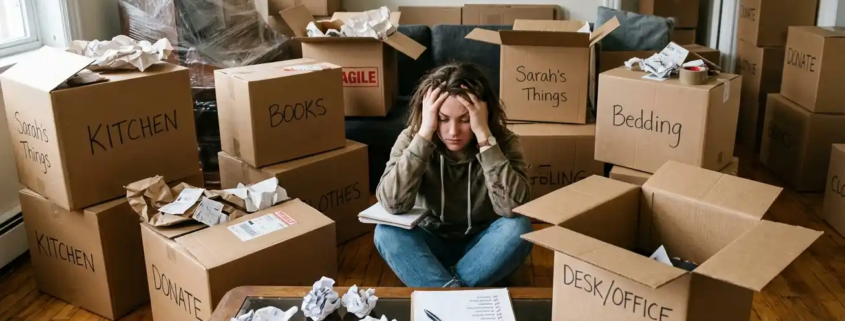
Moving consistently ranks among the most stressful events a person can go through — right up there with starting a new job, going through a divorce, or losing a loved one. That isn’t an exaggeration for effect. Psychologists who study life stress have long placed relocation high on the list, because a move bundles together so many smaller stressors at once: financial pressure, physical exhaustion, disruption of routine, and the quiet grief of leaving a place behind.
So if you’re feeling frazzled, overwhelmed, or strangely emotional about boxing up your life, you’re not being dramatic. You’re having a completely normal response to a genuinely big event. The good news: there’s a lot you can do to make it more manageable.
Why Moving Hits So Hard
Understanding why moving is stressful is the first step to taking the pressure off yourself.
Our brains are wired to find comfort in the familiar. Your home isn’t just a building — it’s a web of routines, sensory cues, and memories that help you feel safe and oriented. When you uproot all of that at once, your nervous system reads it as instability, even when the move is a happy, chosen one.
On top of that, moving forces dozens of decisions in a compressed window of time: what to keep, what to toss, who to hire, when to switch utilities, how to get everything from point A to point B. Decision fatigue is real, and a move serves it up by the truckload. Add in the physical labor and the financial strain, and it’s easy to see why even an exciting move can leave you running on empty.
Practical Ways to Lower the Stress
Start earlier than you think you need to
Procrastination is the single biggest driver of moving-day panic. The earlier you begin, the more you spread the work across calm, ordinary days instead of cramming it into a frantic final week. Even doing one small task a day — clearing a single drawer, gathering documents — builds momentum without burning you out.
Break it into a checklist
A move feels enormous because your brain tries to hold all of it at once. Writing everything down externalizes that mental load. Make a master list, then break it into weekly chunks. Crossing items off gives you a real sense of progress and control — which is exactly what stress steals from you.
Declutter before you pack
You’ll feel lighter, both literally and emotionally. Every item you donate, sell, or recycle is one less thing to wrap, carry, and unpack. Decluttering also has a quiet psychological payoff: it turns a passive, overwhelming situation into an active choice about the life you want in your new space.
Pack an “essentials box”
Set aside a clearly labeled box (or suitcase) with everything you’ll need for the first 24 hours: medications, chargers, a change of clothes, toiletries, basic kitchen items, and important documents. Knowing you won’t be digging through twenty boxes for your toothbrush at midnight is a small thing that prevents a lot of stress.
Don’t try to do it all yourself
This is where many people quietly run themselves into the ground. Asking friends for help, or hiring professional movers to handle the heavy lifting, isn’t a luxury — it’s a way of protecting your energy and your back. Delegating the physical and logistical load frees you up to focus on the emotional side of the transition.
Tend to Your Mind, Not Just the Boxes
Logistics are only half the story. The psychological side of moving deserves just as much attention.
Acknowledge the grief. It’s normal to feel sad about leaving — even a place you’re glad to go. You might mourn the neighborhood coffee shop, the marks on the doorframe tracking your kids’ height, or simply the version of yourself who lived there. Let yourself feel it. Naming the loss helps you move through it rather than carry it in as background tension.
Keep your basic routines intact. When everything else is in flux, anchoring routines become powerful. Try to protect your sleep, eat real meals, and keep moving your body. Stress tempts us to drop exactly the habits that keep us steady. Don’t.
Build in moments of calm. A move can swallow every waking hour if you let it. Deliberately schedule breaks — a walk, a few minutes of slow breathing, a meal where boxes aren’t allowed at the table. These pauses aren’t wasted time; they’re what keep you from hitting the wall.
Say goodbye properly. Take photos of your old home. Visit a favorite local spot one last time. A small ritual of closure helps your brain mark the ending, which makes the new beginning feel cleaner.
Picture the good part. Spend a little time imagining your new space and what you’re looking forward to. Visualizing the upside reminds your nervous system that this disruption has a purpose and a payoff on the other side.
Be Kind to Yourself in the New Place
The stress doesn’t always end the moment the truck pulls away. Settling in takes time, and it’s common to feel a little disoriented or even lonely in the first few weeks.
Unpack the rooms you use most first — your bed and your kitchen — so you have a comfortable, functioning base from day one. Then go at a pace that feels sustainable. There’s no prize for unpacking everything in a weekend. Get out and explore your new surroundings, find your new grocery store and walking route, and give yourself permission to feel fully at home gradually. It usually takes a few months for a new place to truly feel like yours — and that’s perfectly okay.
The Bottom Line
Moving is hard because it matters. It touches your sense of safety, your routines, your relationships, and your finances all at once. But with early planning, a clear checklist, the right help, and a little compassion for yourself, you can move through it without it moving through you.
Take it one box at a time. You’ve got this — and you don’t have to do it alone.
